
Art & international encounters
Apoorv Om at UN Geneva: Art and Digital Inclusion
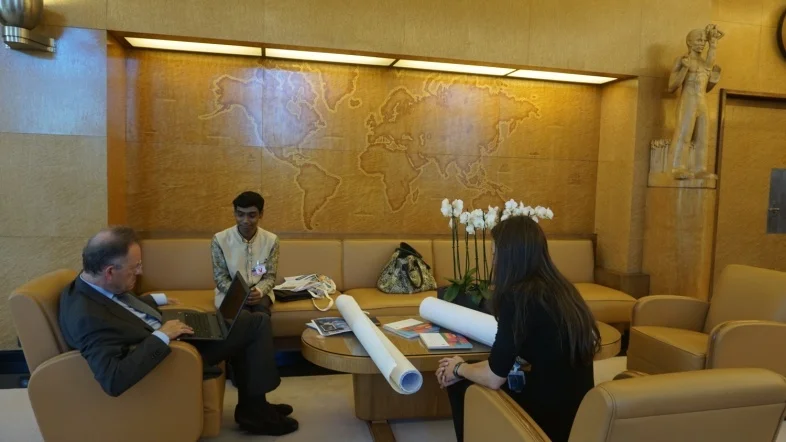
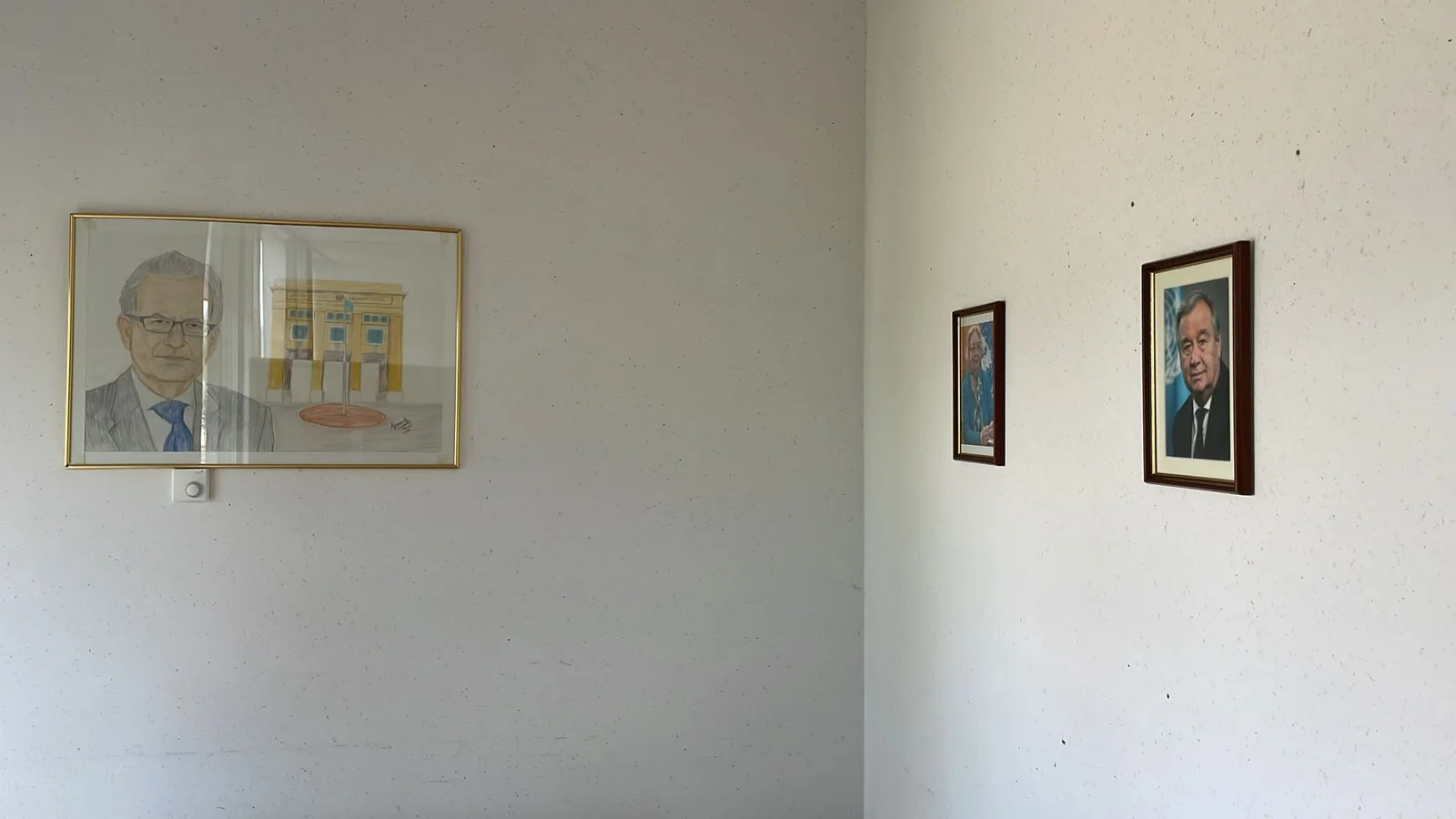
Apoorv Om’s encounters at the United Nations Office at Geneva bring together two strands of his work: visual art and accessible communication. His preserved collection records meetings with Michael Møller, then Director-General of UN Geneva, and artwork featuring Møller alongside the Palais des Nations.
For a deaf artist, a portrait can open a conversation without depending on a shared spoken language. The Geneva story illustrates how creative work can introduce an artist’s perspective to an international audience while keeping the focus on the contribution itself.
An artistic encounter at UN Geneva
The original account of the UN Geneva meeting describes Apoorv presenting artwork and receiving appreciation. A related record of the portrait and Palais des Nations artwork preserves photographs connected with its display at UN Geneva.
These photographs and accounts are the basis for this retrospective. They document an exchange around art in an institutional setting; they do not imply that the United Nations endorses every statement or initiative associated with the artist. The original narratives remain available so readers can examine the collection in its own terms.
The architectural subject is also significant. By placing a portrait alongside an institution’s building, Apoorv connects an individual with the public space in which their work takes place. Readers can explore more of this approach in his mixed-media artwork and architectural models.
Art as a way to communicate
Visual expression offers room for observation, interpretation and dialogue. A drawing can carry detail through colour, proportion, expression and setting. It gives the viewer something concrete to consider and the artist a starting point for sharing an idea.
Apoorv’s work connects this creative practice with an interest in equal participation. Recognition matters when an artist is encountered as a professional with a body of work, rather than being defined only by how they hear or communicate. His biography and artistic journey provide the wider context for that perspective.
Connecting creativity with digital access
The document behind this article also highlights digital tools as part of Apoorv’s inclusion work. Written communication, captions, visual notifications and accessible online galleries can provide different routes to information. Their usefulness depends on the person, the setting and the quality of implementation.
For example, the W3C guidance on captions explains how text alternatives to audio help people access recorded and live media. Captions should convey relevant speech and sounds accurately; simply adding an automated transcript does not resolve every communication need.
Technology also needs thoughtful presentation. Clear navigation, readable text, useful image descriptions and keyboard access help an online art collection reach more people. Involving its intended audience in design and testing gives those decisions a practical basis.
From recognition to participation
A meeting or exhibition creates visibility. Continuing access requires opportunities to create, learn, exhibit, collaborate and influence decisions. Cultural organisations can support that work by asking artists about their communication preferences and making arrangements before an event.
The Geneva collection invites readers to consider both the artwork and the conditions that make artistic exchange possible. Apoorv’s international encounters and global summits show how this conversation extends across different institutions.
Browse the Geneva photographs to see the preserved visual record, or discuss an exhibition or accessible arts collaboration.