
Speaking & digital inclusion
Apoorv Om on Inclusion at IISF, MANIT Bhopal
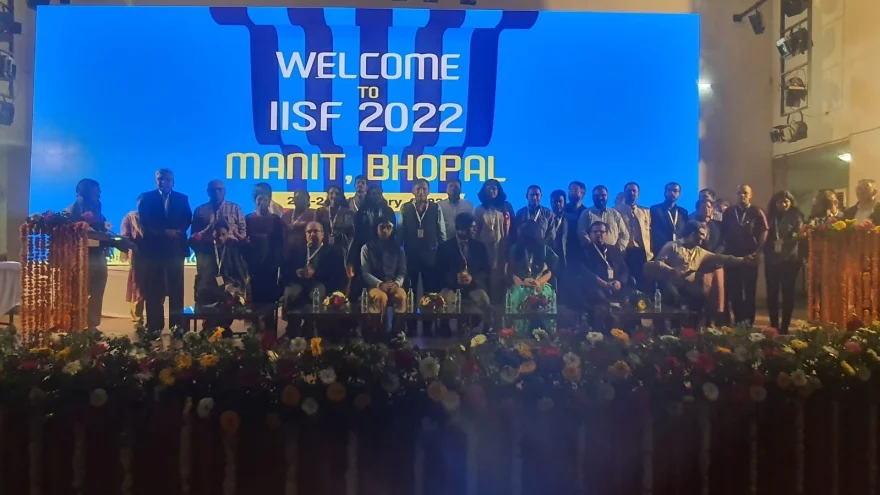
At the State Science and Technology Councils Conclave at MANIT Bhopal, Apoorv Om brought accessible communication into a discussion about innovation. His participation formed part of India International Science Festival (IISF) 2022, the edition held from 21 to 24 January 2023.
As an international artist, national awardee and Fit India Ambassador, Apoorv connected creative practice with a wider question: how can institutions make education, technology, work and community life accessible to more people?
IISF 2022, held in January 2023
The festival’s edition name and calendar dates can be confusing. The government announcement for IISF 2022 confirms that it was scheduled in Bhopal from 21 to 24 January 2023. MANIT provided the setting for a programme bringing science, technology and public engagement together.
Apoorv’s State S&T Councils Conclave archive account records his talk on digital inclusion in communication. A public account shared by Omprakash Sakhlecha also refers to his contribution at the conclave. These records place the discussion in its historical setting without presenting it as a new event.

Accessibility in education and research
Inclusive education depends on more than admission to an institution. Students also need access to teaching materials, classroom communication, assessments, campus spaces and the information used in daily academic life. A barrier in any one of these areas can make participation unnecessarily difficult.
For deaf students, suitable support may include captions, written information, visual demonstrations or sign language interpretation, depending on individual preferences. Institutions should consult the people involved rather than assume that one arrangement will suit everyone.
Research and development benefit from the same approach. Including intended users in the design and testing of a tool can reveal practical obstacles that a technical specification misses. Accessibility becomes part of how a project is evaluated, alongside whether it performs its intended function.
Technology that responds to communication needs
The source document connects the Bhopal talk with assistive technology, accessible digital platforms and communication support. These are useful areas for collaboration between educators, researchers, public institutions and the people using their services.
- Learning resources: provide readable documents and captioned instructional media.
- Digital services: make forms, navigation and important information usable with different access methods.
- Communication tools: offer text-based options and check the accuracy of automated captions.
- User involvement: ask people to test proposed solutions in realistic settings.
These examples are practical directions for institutions, not a claim that every approach was demonstrated at the conclave. Tools need to be assessed for accuracy, privacy, affordability and suitability before they are adopted.
Participation across work and community life
The article’s wider message extends to recruitment, workplace training, cultural activities and fitness. Accessible information and fair opportunities help people contribute according to their skills. Representation is most useful when it leads to continuing participation and a say in decisions.
Apoorv’s education and speaking work and communication training initiatives connect with this theme across different settings. His Bhopal photographs provide a record of one contribution within that continuing effort.
Explore the conclave photographs or enquire about an accessibility talk or training session.